
Panchakarma: Complete Guide to 5 Ayurvedic Therapies, Benefits, Risks & Procedure
Table of Contents
Panchakarma is one of the best-known therapeutic approaches in Ayurveda, the traditional system of medicine that originated in India. The word Panchakarma literally means “five actions” and refers to a group of therapeutic procedures traditionally used to manage health conditions and restore balance according to Ayurvedic principles.
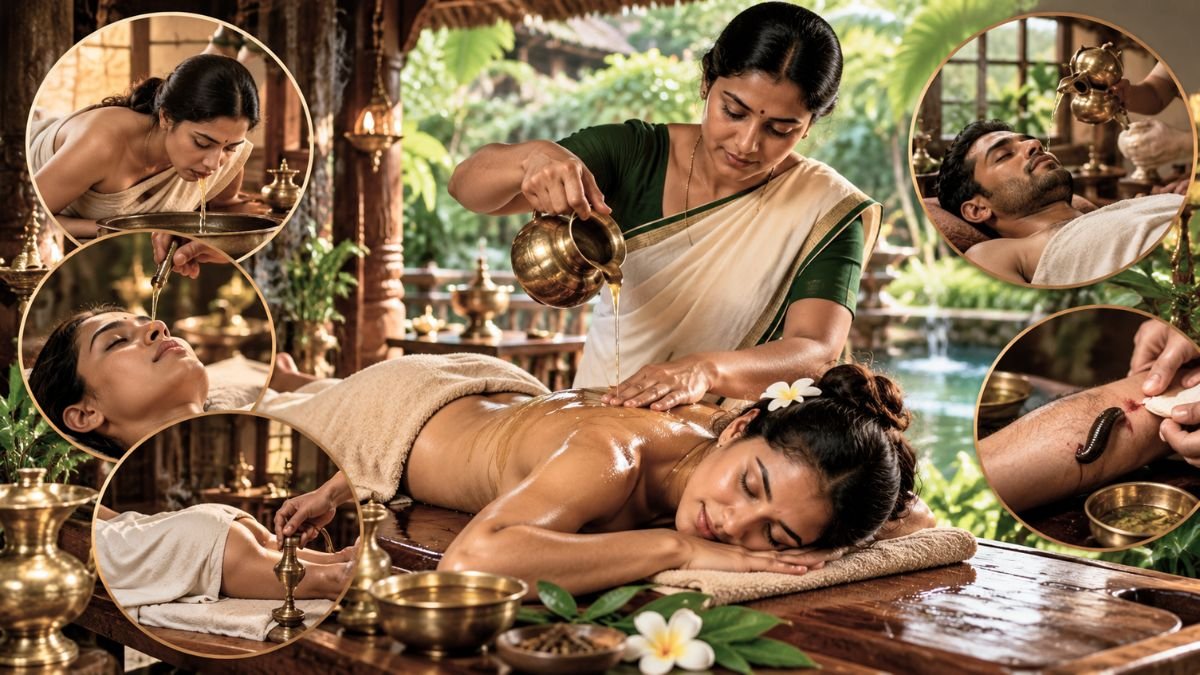
Today, Panchakarma is frequently promoted as an Ayurvedic detox, cleansing treatment, rejuvenation therapy, weight-loss program, or wellness retreat. However, traditional Panchakarma is considerably more structured than a spa treatment or a generic detox package.
A properly planned Panchakarma program is individualized. The selection of therapies may depend on factors such as a person’s constitution, health status, digestive capacity, age, strength, symptoms, medications, and the Ayurvedic assessment of the individual’s condition.
This complete guide explains what Panchakarma is, the five traditional therapies, how Panchakarma is performed, its traditional benefits, preparation and recovery, diet, duration, risks, safety precautions, common myths, how to evaluate a Panchakarma centre, and what experienced practitioners consider before beginning treatment.
What Is Panchakarma?
Panchakarma is a traditional Ayurvedic therapeutic approach involving five principal procedures.
The term comes from two Sanskrit words:
- Pancha — five
- Karma — actions or therapeutic procedures
In classical Ayurveda, Panchakarma is associated with the management of the three doshas:
- Vata
- Pitta
- Kapha
According to Ayurvedic theory, an imbalance of these doshas may contribute to illness and poor wellbeing. Panchakarma is traditionally intended to help manage aggravated doshas and support restoration of balance.
However, an important point is often overlooked:
Panchakarma Is Not the Same for Everyone
Not every person needs all five Panchakarma procedures.
An Ayurvedic physician may select one or more procedures according to the individual’s condition. Preparation, the main therapy, diet, medicines, duration, and post-treatment care may also vary.
Therefore, Panchakarma should not be viewed as a standardized five-step treatment that everyone should undergo in exactly the same way.
The central principle is individualization.
The Five Main Panchakarma Therapies
The five traditional Panchakarma procedures are:
- Vamana — Therapeutic Emesis
- Virechana — Therapeutic Purgation
- Basti — Medicated Enema Therapy
- Nasya — Nasal Administration of Medicines
- Raktamokshana — Bloodletting
Each procedure has a different therapeutic purpose within traditional Ayurveda.
Let’s understand them individually.
1. Vamana – Therapeutic Emesis
Vamana is a controlled therapeutic vomiting procedure described in Ayurveda.
It is traditionally associated primarily with the management of aggravated Kapha dosha.
Vamana is not simply ordinary vomiting. In a traditional Panchakarma setting, it is performed after appropriate preparation and under the supervision of an Ayurvedic physician.
How Is Vamana Performed?
The exact preparation varies according to the individual. Preparatory measures may include:
- Internal oleation
- External oil therapies
- Sudation or sweating therapies
- Dietary preparation
- Other individualized procedures
The physician determines whether therapeutic emesis is appropriate and how the procedure should be conducted.
Following the procedure, the individual may require rest and a carefully planned diet.
Is Vamana Suitable for Everyone?
No.
Therapeutic emesis can result in dehydration, electrolyte disturbances, aspiration, or other complications if performed improperly.
Therefore, Vamana should never be attempted at home or without qualified professional supervision.
2. Virechana – Therapeutic Purgation
Virechana is a traditional Ayurvedic therapeutic procedure involving controlled purgation.
It is traditionally associated with the management of aggravated Pitta dosha.
The process uses prescribed substances intended to produce therapeutic bowel evacuation.
What Happens During Virechana?
Depending on the treatment plan, preparation may involve:
- Dietary modification
- Internal oleation
- External oleation
- Sudation
- Appropriate bowel preparation
A physician determines the appropriate medicine, dosage, timing, and duration.
After the procedure, the individual may experience multiple bowel movements and therefore requires appropriate hydration and post-treatment care.
Why Is Virechana Used?
Within Ayurveda, Virechana is traditionally used for conditions associated with Pitta imbalance and for therapeutic cleansing.
However, purgation should not automatically be assumed to be appropriate for every digestive, liver, skin, or metabolic problem.
3. Basti – Medicated Enema Therapy
Basti is one of the most important therapies in traditional Panchakarma.
It involves administering medicinal preparations through the rectal route.
Ayurveda traditionally considers Basti particularly important for disorders associated with Vata dosha.
Different forms of Basti are described, including:
- Niruha or Kashaya Basti — generally involving herbal decoctions
- Anuvasana Basti — generally involving medicated oils or fats
The exact preparation depends on the individual’s condition and treatment plan.
Why Is Basti Considered Important in Ayurveda?
Traditional Ayurvedic literature gives Basti a particularly significant role in the management of Vata-related conditions.
It may be included in treatment plans addressing certain musculoskeletal, neurological, digestive, or other conditions from an Ayurvedic perspective.
However, the use of Basti for a particular disease should be determined by a qualified practitioner rather than based solely on internet recommendations.
4. Nasya – Nasal Administration of Medicines
Nasya involves administering selected medicinal oils, herbal preparations, or other substances through the nasal passages.
In Ayurveda, the nose is traditionally regarded as an important route for therapies involving the head and neck region.
Nasya is traditionally used in the management of certain conditions involving:
- Head and neck
- Nose
- Sinuses
- Facial region
- Certain neurological or sensory complaints
How Is Nasya Performed?
The individual is positioned appropriately, and the prescribed preparation is administered into the nostrils.
The type and quantity of medicine depend on the individual’s condition.
Nasya is not simply the practice of putting any herbal oil into the nose. The choice of preparation and technique should be determined by a qualified practitioner.
5. Raktamokshana – Bloodletting
Raktamokshana is a traditional Ayurvedic procedure involving controlled removal of blood.
Historically, Ayurveda described bloodletting for selected conditions, particularly certain localized disorders.
However, blood removal is an invasive procedure and carries potential risks such as:
- Infection
- Excessive bleeding
- Anemia
- Scarring
- Injury
- Transmission of blood-borne infections if proper sterile procedures are not followed
For this reason, it should only be considered where legally and medically appropriate and under proper professional supervision.
It should never be performed as a home remedy.
Panchakarma Is More Than the Five Main Procedures
One of the most common misunderstandings about Panchakarma is that it simply means performing five therapies.
Traditional Panchakarma treatment is generally described as a broader process involving:
- Purvakarma — Preparation
- Pradhana Karma — Main Therapeutic Procedure
- Paschat Karma — Post-Treatment Care
Understanding these stages is essential to understanding traditional Panchakarma.
Purvakarma – Preparing the Body
Purvakarma refers to preparatory procedures performed before the main Panchakarma therapy.
Two commonly discussed preparatory approaches are:
Snehana
Snehana involves the use of oils or other unctuous substances, internally or externally, according to the treatment plan.
External oil application may include traditional Ayurvedic massage therapies.
Swedana
Swedana refers to therapeutic sweating or fomentation procedures.
According to Ayurvedic principles, these preparatory therapies are intended to prepare the body for the main therapeutic procedure.
The exact preparation differs from person to person.
Pradhana Karma – The Main Therapy
Pradhana Karma refers to the principal therapeutic procedure selected for the individual.
Depending on the Ayurvedic assessment, the practitioner may recommend:
- Vamana
- Virechana
- Basti
- Nasya
- Raktamokshana
Not everyone receives every procedure.
In fact, individualization is one of the important principles of traditional Panchakarma practice.
Paschat Karma – Post-Treatment Care
Post-treatment care is an important part of Panchakarma.
After certain procedures, the digestive system may require a gradual return to a normal diet.
Ayurveda traditionally describes dietary progression after intensive cleansing procedures.
The diet may begin with light, easily digestible foods and gradually progress toward a regular diet.
Rest and avoidance of excessive physical exertion may also be recommended depending on the therapy.
What Are the Traditional Benefits of Panchakarma?
Panchakarma is traditionally used with the intention of supporting balance and improving overall wellbeing.
People undergoing Panchakarma may report improvements in areas such as:
- Digestive comfort
- Sense of lightness
- Relaxation
- Sleep
- General wellbeing
- Stress management
- Energy and vitality
However, it is important to distinguish between traditional Ayurvedic concepts and modern scientific evidence.
Scientific research on Panchakarma is still developing, and evidence varies considerably depending on the specific therapy and health condition being studied.
Therefore, Panchakarma should not be presented as a guaranteed treatment or cure for disease.
Can Panchakarma Detox the Body?
The word “detox” is frequently associated with Panchakarma.
From an Ayurvedic perspective, Panchakarma is traditionally intended to eliminate accumulated doshas and restore balance.
However, modern physiology describes detoxification differently.
The human body already has sophisticated systems for processing and eliminating many substances, particularly through:
- Liver
- Kidneys
- Lungs
- Gastrointestinal tract
- Skin
Therefore, claims such as “Panchakarma removes all toxins from the body” are too broad to be considered scientifically established.
A more responsible description is that Panchakarma is a traditional Ayurvedic therapeutic approach involving individualized cleansing and supportive procedures.
Can Panchakarma Help With Weight Loss?
This is one of the most frequently searched questions about Panchakarma.
The short answer: Panchakarma should not be considered a guaranteed weight-loss treatment.
During a Panchakarma program, a person may change their diet, consume fewer calories, lose water, experience changes in bowel contents, and alter their daily activity.
As a result, body weight may temporarily decrease.
However, temporary weight reduction is not necessarily the same as losing body fat.
Long-term weight management depends on sustainable factors such as:
- Balanced nutrition
- Appropriate calorie intake
- Adequate protein
- Regular physical activity
- Sleep
- Stress management
- Long-term lifestyle habits
Panchakarma should therefore not be promoted as a shortcut to permanent weight loss.
Panchakarma and Digestive Health
Digestive health is an important concept in Ayurveda.
Ayurveda places considerable emphasis on Agni, often described as digestive and metabolic capacity.
Panchakarma programs may include dietary modifications and therapies intended to support digestive function according to Ayurvedic principles.
Some individuals may feel that their digestion improves following a structured dietary and therapeutic program.
However, persistent symptoms such as:
- Severe abdominal pain
- Persistent vomiting
- Blood in stool
- Unexplained weight loss
- Difficulty swallowing
- Persistent diarrhea
- Severe constipation
require appropriate medical evaluation rather than relying solely on Panchakarma.
What Should You Eat During Panchakarma?
Diet is an important part of many traditional Panchakarma programs.
The specific diet depends on the treatment and the individual.
A practitioner may recommend simple, easily digestible foods such as:
- Rice-based preparations
- Cooked vegetables
- Soups
- Khichdi
- Lightly prepared foods
- Adequate fluids
Foods that are very heavy, excessively fried, or difficult to digest may be restricted during certain phases.
However, there is no single Panchakarma diet that is appropriate for everyone.
People with diabetes, kidney disease, liver disease, eating disorders, pregnancy, or other medical conditions should not make major dietary changes without professional guidance.
What Should You Eat After Panchakarma?
After an intensive Panchakarma procedure, some traditional protocols recommend a gradual return to a normal diet.
A typical progression may involve:
Very light foods → soft and easily digestible foods → regular balanced meals
The duration and exact diet depend on the procedure and the person’s health.
Adequate hydration is also important.
A person should not assume that prolonged fasting or severe calorie restriction is necessary after Panchakarma.
How Long Does Panchakarma Take?
There is no single standard duration for Panchakarma.
The duration can depend on:
- Individual health
- Selected therapy
- Preparatory procedures
- Treatment goals
- Response to therapy
- Post-treatment requirements
Some centres advertise short Panchakarma packages, while others offer programs lasting several weeks.
The duration of a package alone does not determine whether the treatment is appropriate.
A properly designed Panchakarma program should be based on individual assessment.
The Panchakarma Package Problem: When a Fixed Program Doesn’t Make Sense
This is an important issue that prospective Panchakarma patients often overlook.
Many wellness centres offer fixed packages such as:
- 7-day Panchakarma
- 14-day Panchakarma
- 21-day Panchakarma
- 30-day Ayurvedic detox
A fixed package is not automatically bad. The problem arises when the package determines the treatment rather than the patient’s assessment determining the treatment.
Patient-Centred vs Package-Centred Panchakarma
| Patient-Centred Approach | Package-Centred Approach |
|---|---|
| Assessment comes first | Package comes first |
| Therapy selected according to individual needs | Same therapies offered to many people |
| Duration may be adjusted | Fixed duration |
| Medical history is considered | Limited assessment |
| Treatment is monitored | Procedures may follow a preset schedule |
| Follow-up is part of the plan | Follow-up may be unclear |
More Days Do Not Automatically Mean Better Results
A 21-day program is not automatically better than a 7-day program.
The appropriate duration depends on the individual, the therapy, preparation, response, recovery and professional judgment.
Similarly, undergoing more procedures does not automatically mean receiving better treatment.
What Should a Transparent Panchakarma Program Include?
Before paying for a package, ask whether the centre clearly explains:
- Initial consultation and assessment
- Selected therapies
- Frequency of procedures
- Medicines, if any
- Dietary recommendations
- Monitoring
- Possible risks
- Follow-up care
- What is included and excluded from the package
Expert Insight
A good Panchakarma program should be designed around the person—not around the number of nights in a wellness package.
Is Panchakarma Painful?
The experience varies depending on the procedure.
Some therapies may feel relaxing, while others can be physically uncomfortable.
For example:
- Vamana involves therapeutic vomiting.
- Virechana involves induced bowel evacuation.
- Basti involves rectal administration of medicinal preparations.
- Raktamokshana is an invasive procedure.
Therefore, Panchakarma should not be described simply as a relaxing spa treatment.
It is a therapeutic system that can involve physically intensive procedures.
Panchakarma vs Ayurvedic Massage
Another common misconception is that Panchakarma is the same as Ayurvedic massage.
It is not.
Abhyanga is a traditional Ayurvedic oil massage therapy.
It may be used as part of the preparatory stage of some Panchakarma protocols.
However:
Abhyanga ≠ Panchakarma
A massage session by itself should not automatically be described as Panchakarma.
Panchakarma vs Ayurvedic Wellness Retreat
Today, many wellness centres offer programs labelled:
- Ayurvedic Detox
- Panchakarma Retreat
- Ayurvedic Cleanse
- Panchakarma Spa
- Wellness Detox
These programs can vary significantly.
Before choosing a centre, ask:
- Is a qualified Ayurvedic physician available?
- Will I receive an individual assessment?
- Is my medical history reviewed?
- Who will supervise the procedures?
- What exactly is included in the program?
- What are the possible risks?
- Is emergency medical support available?
- What happens if I develop complications?
A luxurious facility does not automatically mean that the medical care is appropriate.
When Panchakarma Is Not the Right Choice: The “It Depends” Decision
One of the most important questions is not:
“Which Panchakarma therapy should I take?”
but:
“Is Panchakarma appropriate for me right now?”
This distinction matters.
1. Wellness Seeker vs Person With an Active Illness
A healthy person seeking traditional wellness care is different from someone experiencing severe abdominal pain, unexplained weight loss, persistent vomiting, high fever, or another potentially serious symptom.
The second situation requires appropriate medical evaluation rather than assuming that Panchakarma is the answer.
2. Strong vs Physically Depleted Individuals
A person’s nutritional status, hydration, age, physical strength and ability to tolerate intensive procedures may influence whether a particular therapy is appropriate.
3. Having a Disease Does Not Automatically Mean You Need Panchakarma
A diagnosis alone does not establish that Panchakarma is appropriate.
The individual’s overall condition, treatment goals, medications and current stability also matter.
4. Timing Matters
Even when an individual may be considered for Panchakarma, treatment may need to be postponed during situations such as acute illness, significant dehydration, recovery from surgery or medical instability.
5. Unexplained Symptoms Should Be Investigated First
Symptoms should not automatically be attributed to “dosha imbalance.”
Persistent or concerning symptoms deserve appropriate medical assessment.
Expert Note
The right question is not simply whether Panchakarma can be beneficial. The more important question is whether it is appropriate for this particular person, at this particular time, for this particular purpose.
Who Should Avoid or Take Special Care With Panchakarma?
Panchakarma is not appropriate for everyone.
Special caution may be required for people who are:
- Pregnant
- Severely weak or underweight
- Dehydrated
- Acutely ill
- Recovering from surgery
- Taking multiple prescription medicines
- Living with serious chronic disease
- Experiencing significant anemia
- Living with bleeding disorders
- Very young
- Frail or elderly
People with significant medical conditions should discuss Panchakarma with their healthcare professionals before beginning treatment.
Panchakarma and Prescription Medicines
If you take regular medicines, do not stop them simply because you are beginning Panchakarma.
Some Ayurvedic medicines and therapies may interact with conventional medicines or may not be appropriate in certain medical conditions.
Always provide your Ayurvedic practitioner with a complete list of:
- Prescription medicines
- Over-the-counter medicines
- Vitamins
- Minerals
- Herbal supplements
- Other Ayurvedic preparations
Any changes to essential prescription medicines should be discussed with the prescribing doctor.
Possible Risks and Side Effects of Panchakarma
Although Panchakarma is traditionally practiced within Ayurveda, the procedures are not completely risk-free.
Depending on the therapy, possible problems can include:
- Dehydration
- Weakness
- Dizziness
- Electrolyte imbalance
- Excessive bowel movements
- Vomiting
- Aspiration
- Infection
- Bleeding
- Rectal irritation
- Medication interactions
The level of risk depends on the procedure, the person’s health and the quality of supervision.
This is why proper assessment and professional monitoring are important.
What Happens When Panchakarma Goes Wrong?
A particularly important misconception is that a stronger reaction automatically means a stronger treatment effect.
It does not.
During an intensive procedure, some temporary discomfort may occur depending on the therapy. But severe or persistent symptoms should not automatically be interpreted as evidence that “toxins are leaving the body.”
The “Detox Reaction” Trap
A person experiencing:
- Severe weakness
- Repeated vomiting
- Excessive diarrhea
- Fainting
- Significant dehydration
- Significant bleeding
should not simply be told that the reaction means the treatment is working.
These symptoms may require reassessment or medical attention.
Why Hydration Matters
Repeated vomiting or bowel evacuation can result in substantial fluid and electrolyte loss.
This can be particularly concerning for vulnerable individuals.
The Practitioner Should Reassess
A responsible practitioner should not automatically intensify treatment when a person is deteriorating.
The patient’s symptoms, hydration, strength and overall condition should be reassessed.
The Stop-and-Reassess Principle
An important safety principle is:
Worsening symptoms → Stop and assess → Determine the cause → Provide appropriate care
rather than:
Worsening symptoms → Assume detox → Continue treatment
Expert Insight
A stronger physical reaction is not automatically a stronger therapeutic result.
When Should You Seek Medical Attention?
Do not assume that every symptom occurring during Panchakarma is a normal part of detoxification.
Seek prompt medical attention if you experience:
- Severe or persistent abdominal pain
- Fainting
- Severe dizziness
- Difficulty breathing
- Persistent vomiting
- Significant bleeding
- High fever
- Severe dehydration
- Confusion
- Chest pain
- Sudden weakness
- Any rapidly worsening symptom
Serious symptoms should not be ignored in the belief that they represent a normal “detox reaction.”
The Advanced Panchakarma Framework: From Assessment to Follow-Up
For readers who want to understand Panchakarma beyond the basic five procedures, it helps to think of it as a process rather than an event.
A responsible framework can be understood as:
ASSESS → SCREEN → PLAN → PREPARE → TREAT → MONITOR → RECOVER → FOLLOW-UP
Let’s examine each stage.
Stage 1: Assess
The process begins with understanding why the individual is considering Panchakarma.
Important questions include:
- What is the person’s goal?
- What symptoms are present?
- How long have they been present?
- Are there existing medical conditions?
- What medicines are being taken?
- Is there anything requiring medical evaluation first?
Stage 2: Screen
The next question is suitability.
The practitioner needs to consider factors such as:
- Age
- Physical strength
- Hydration
- Current illness
- Pregnancy
- Medications
- Chronic conditions
- Previous procedures
- General ability to tolerate intensive treatment
Stage 3: Plan
Only after assessment and screening should the treatment approach be selected.
The process should ideally begin with:
“Which intervention is appropriate for this individual?”
rather than:
“Which package should this person purchase?”
Stage 4: Prepare
Appropriate Purvakarma procedures may be used according to the selected treatment.
The preparation should be individualized rather than automatically applied to everyone.
Stage 5: Treat
The selected principal procedure is performed under appropriate supervision.
Not every patient requires all five traditional Panchakarma procedures.
Stage 6: Monitor
This is an important part of responsible care.
The practitioner should remain attentive to:
- Tolerance
- Hydration
- Strength
- Symptoms
- Response to treatment
- Unexpected adverse effects
Stage 7: Recover
After the main therapy, the person may require:
- Rest
- Dietary progression
- Hydration
- Reduced physical exertion
- Additional supportive care
Stage 8: Follow Up
The treatment should not necessarily be considered complete the moment the final procedure ends.
Follow-up can help determine:
- How the person is feeling
- Whether symptoms have changed
- Whether diet should be adjusted
- Whether normal activities can resume
- Whether further care is appropriate
Advanced Insight
Panchakarma is better understood as a clinical process than as a single cleansing event.
How to Choose a Panchakarma Centre
If you are considering Panchakarma, choosing the right practitioner and facility is extremely important.
1. Look for Qualified Professionals
Choose a centre where qualified Ayurvedic practitioners are involved in treatment planning.
2. Ask for an Individual Assessment
A responsible practitioner should assess your health rather than automatically placing you into a standard package.
3. Discuss Your Medical History
Tell the practitioner about existing medical conditions and medications.
4. Understand the Treatment Plan
Ask exactly which therapies will be performed and why.
5. Ask About Risks
A trustworthy practitioner should be willing to explain potential side effects and contraindications.
6. Check Hygiene Standards
This is particularly important for procedures involving invasive techniques or bodily fluids.
7. Ask What Happens If You Become Unwell
A professional centre should have a clear process for responding to adverse symptoms.
8. Avoid Unrealistic Claims
Be cautious of centres promising:
- Permanent weight loss
- Guaranteed disease cures
- Removal of all toxins
- Instant rejuvenation
- Guaranteed results for every person
Healthcare claims should always be approached critically.
What Should a Good Panchakarma Consultation Look Like?
Before treatment begins, a proper consultation should go beyond simply asking:
“Which package would you like?”
A more meaningful consultation should explore:
Your Main Objective
Why are you considering Panchakarma?
Your Current Symptoms
What are you experiencing and for how long?
Your Medical History
What existing conditions or previous procedures are relevant?
Your Medicines
What prescription, over-the-counter, herbal and Ayurvedic products are you taking?
Your Physical Condition
Are you adequately nourished, hydrated and physically able to tolerate the proposed procedure?
Your Treatment Expectations
Are you expecting detoxification, relaxation, weight loss, symptom management or something else?
Clear expectations help prevent inappropriate treatment and unrealistic promises.
10 Questions to Ask Before Starting Panchakarma
Before beginning treatment, consider asking your practitioner:
- Why is Panchakarma being recommended for me?
- Which Panchakarma therapy is appropriate for my condition?
- Do I need all five procedures?
- What preparation will I need?
- How long will the treatment last?
- What should I eat during the treatment?
- What are the possible side effects?
- Could the treatment interact with my medicines?
- What should I do if I feel unwell?
- What follow-up care will I receive?
These questions can help you make a more informed decision.
Panchakarma Myth vs Reality: 12 Claims You Should Question
Panchakarma has become increasingly popular, and with popularity comes marketing claims.
Here are some common claims that deserve a closer look.
| Claim | Reality |
|---|---|
| Everyone needs Panchakarma every year | There is no universal requirement for every person to undergo Panchakarma annually. |
| Panchakarma removes every toxin | This is an overly broad claim. The body already has physiological systems for metabolism and elimination. |
| More vomiting or purging means better treatment | A stronger reaction is not automatically a better therapeutic result. |
| All five procedures must be performed | Traditional Panchakarma is individualized. |
| A 21-day program is always better than a 7-day program | Duration alone does not determine suitability or effectiveness. |
| Panchakarma permanently resets metabolism | Such permanent physiological claims require appropriate scientific evidence. |
| Panchakarma guarantees permanent weight loss | Temporary weight changes are not necessarily permanent fat loss. |
| Panchakarma is simply Ayurvedic massage | Massage may be part of preparation, but Panchakarma is broader. |
| A luxury retreat guarantees quality treatment | Facilities and luxury do not replace professional assessment and supervision. |
| Severe weakness means the toxins are leaving | Severe symptoms may indicate dehydration or another problem and should be assessed. |
| Panchakarma can replace prescribed medicines | Essential medicines should not be stopped without medical advice. |
| Natural treatment is automatically risk-free | Natural or traditional procedures can still have risks and contraindications. |
Red Flags in Panchakarma Marketing
Be particularly cautious when a centre promises:
- “100% guaranteed cure”
- “All toxins will be removed”
- “Permanent weight loss”
- “No need for medicines”
- “Everyone needs Panchakarma”
- “The stronger the reaction, the better”
- “One package works for every person”
A trustworthy healthcare provider should be comfortable discussing limitations, risks and uncertainty.
Panchakarma: Traditional Ayurveda and Modern Healthcare
Panchakarma occupies an important place in the traditional Ayurvedic system.
At the same time, modern healthcare emphasizes:
- Evidence-based diagnosis
- Safety monitoring
- Clinical research
- Appropriate treatment for specific diseases
- Identification of serious medical conditions
The most responsible approach is to understand Panchakarma in its proper context.
It can be explored as a traditional Ayurvedic therapeutic approach, but claims about treating serious diseases should be supported by appropriate evidence.
People with significant health problems should receive appropriate medical evaluation and should not delay proven treatment.
Panchakarma and Modern Evidence: What Should Readers Understand?
An important distinction should be made between:
Traditional Ayurvedic knowledge
and
modern clinical evidence.
Ayurvedic texts provide the traditional framework for understanding Panchakarma, doshas, Agni and therapeutic procedures.
Modern research, meanwhile, evaluates individual therapies and outcomes using contemporary scientific methods.
The evidence is not equally strong for every Panchakarma procedure, every health condition, or every claimed benefit.
Therefore, a responsible article should avoid both extremes:
Extreme 1: “Panchakarma cures everything.”
This overstates what can reasonably be claimed.
Extreme 2: “Traditional therapies have no value whatsoever.”
This also oversimplifies a complex medical tradition.
A better approach is to examine each therapy, indication, patient and outcome individually while maintaining appropriate safety standards.
Frequently Asked Questions About Panchakarma
What does Panchakarma mean?
Panchakarma means “five actions” and refers to five major therapeutic procedures described in Ayurveda.
What are the five Panchakarma therapies?
The five traditional procedures are:
- Vamana
- Virechana
- Basti
- Nasya
- Raktamokshana
Is Panchakarma the same as detox?
Panchakarma is often described as an Ayurvedic detoxification approach, but the modern concept of detoxification is different from the traditional Ayurvedic concept of cleansing and dosha management.
Can Panchakarma help with weight loss?
Panchakarma may be accompanied by temporary weight changes due to dietary and fluid changes, but it should not be considered a guaranteed or permanent weight-loss method.
How many days is Panchakarma?
There is no universal duration. Treatment length depends on the individual and the therapies selected.
Can I do Panchakarma at home?
Some Panchakarma procedures require professional supervision and should not be performed independently at home.
Is Panchakarma safe?
Safety depends on the individual’s health, the specific procedure, preparation, dosage, hygiene and professional supervision.
Can I take my regular medicines during Panchakarma?
Do not stop or change prescribed medicines without consulting the doctor who prescribed them. Tell your Ayurvedic practitioner about all medicines and supplements you use.
Is Panchakarma suitable for elderly people?
It may or may not be appropriate depending on the individual’s health and strength. Older adults should receive an individualized assessment before undergoing intensive therapies.
Does Panchakarma cure chronic diseases?
Panchakarma should not be promoted as a guaranteed cure for chronic diseases. Anyone with a chronic condition should receive appropriate medical evaluation and treatment.
Is a 21-day Panchakarma better than a 7-day Panchakarma?
Not necessarily. Duration should be based on the individual treatment plan rather than the assumption that a longer program is automatically better.
Do I need all five Panchakarma procedures?
No. Traditional Panchakarma is individualized, and the practitioner may select specific procedures according to the person’s condition.
What should I do if I feel very weak during Panchakarma?
Do not automatically assume that severe weakness is a normal detox reaction. Inform the practitioner and seek appropriate medical assessment if symptoms are significant or worsening.
Is Ayurvedic massage the same as Panchakarma?
No. Ayurvedic massage such as Abhyanga may be included in some treatment plans, but massage alone is not Panchakarma.
Final Thoughts
Panchakarma is a traditional Ayurvedic therapeutic system involving five principal procedures: Vamana, Virechana, Basti, Nasya and Raktamokshana.
It is much more than a massage or a short-term detox package.
Traditionally, Panchakarma involves individualized assessment, preparation, a selected therapeutic procedure, appropriate monitoring, and post-treatment care.
The most important lesson is that Panchakarma is not a one-size-fits-all treatment.
The appropriate therapy, duration, preparation, diet and follow-up can depend on the individual.
It is also important to maintain realistic expectations. Panchakarma should not be presented as a guaranteed cure, a replacement for essential medical treatment, or a shortcut to permanent weight loss.
If you are considering Panchakarma, consult a qualified Ayurvedic physician and discuss your complete medical history, current medications, existing health conditions and treatment goals.
A responsible Panchakarma program should prioritize:
- Individual assessment
- Appropriate treatment selection
- Professional supervision
- Hygiene
- Patient safety
- Realistic expectations
- Informed decision-making
- Appropriate follow-up
Ultimately, the goal should not be to undergo the most intensive Panchakarma possible.
The goal should be to choose the most appropriate and responsible approach for the individual.
Medical Disclaimer
This article is intended for general educational and informational purposes only. It does not constitute medical advice, diagnosis or treatment.
Ayurveda and Panchakarma are traditional healthcare practices, and scientific evidence for their effectiveness varies depending on the specific therapy and health condition.
Do not stop prescribed medicines or delay appropriate medical care because of information presented in this article.
If you have a medical condition, are pregnant, take prescription medicines, have recently undergone surgery, or are considering an intensive therapeutic procedure, consult an appropriately qualified healthcare professional before beginning treatment.
Also Read
Lose Belly Fat Fast Naturally With Ayurvedic Medicine Herbs
Follow us on Facebook & Instagram